Technology

Odoo Data Lake

Unified Data Intelligence for Your ERP Ecosystem

Odoo DataLake konsolidiert und synchronisiert kontinuierlich Daten aus Ihrer gesamten Odoo-Instanz – auch über mehrere Instanzen und die Versionen V15 bis V19 hinweg – in eine einzige saubere, JSON-formatierte Schicht auf Ihrer eigenen Infrastruktur. Es entkoppelt analytische Auslastungen von Ihrem produktiven ERP, sodass schwere Abfragen den Tagesbetrieb nie verlangsamen, und versorgt BI-Dashboards, Enterprise Search und RAG-Pipelines aus einer einzigen konsistenten Quelle.

Ausgabeformat
Sauberes, vorhersehbares JSON
Versionsabdeckung
Odoo V15 bis V19
Grundpreis
Ab 1.999 EUR
Cloud-Preise
500 kostenlose Datensätze, dann pro Datensatz

Anwendungsfälle

Data Engineer einer Handelsgruppe, der ein Snowflake Data Warehouse mit Daten aus Odoo befüllen soll

Ausgangslage
Der Aufbau direkter Extraktionslogik von Odoo zum Data Warehouse für jedes Modul würde bedeuten, eine wachsende Zahl individueller Konnektoren zu pflegen.
Lösungsweg
Er orchestriert stattdessen Pipelines gegen das normalisierte JSON im Odoo DataLake und nutzt bereinigte Daten ohne Odoo-spezifische Extraktionslogik.
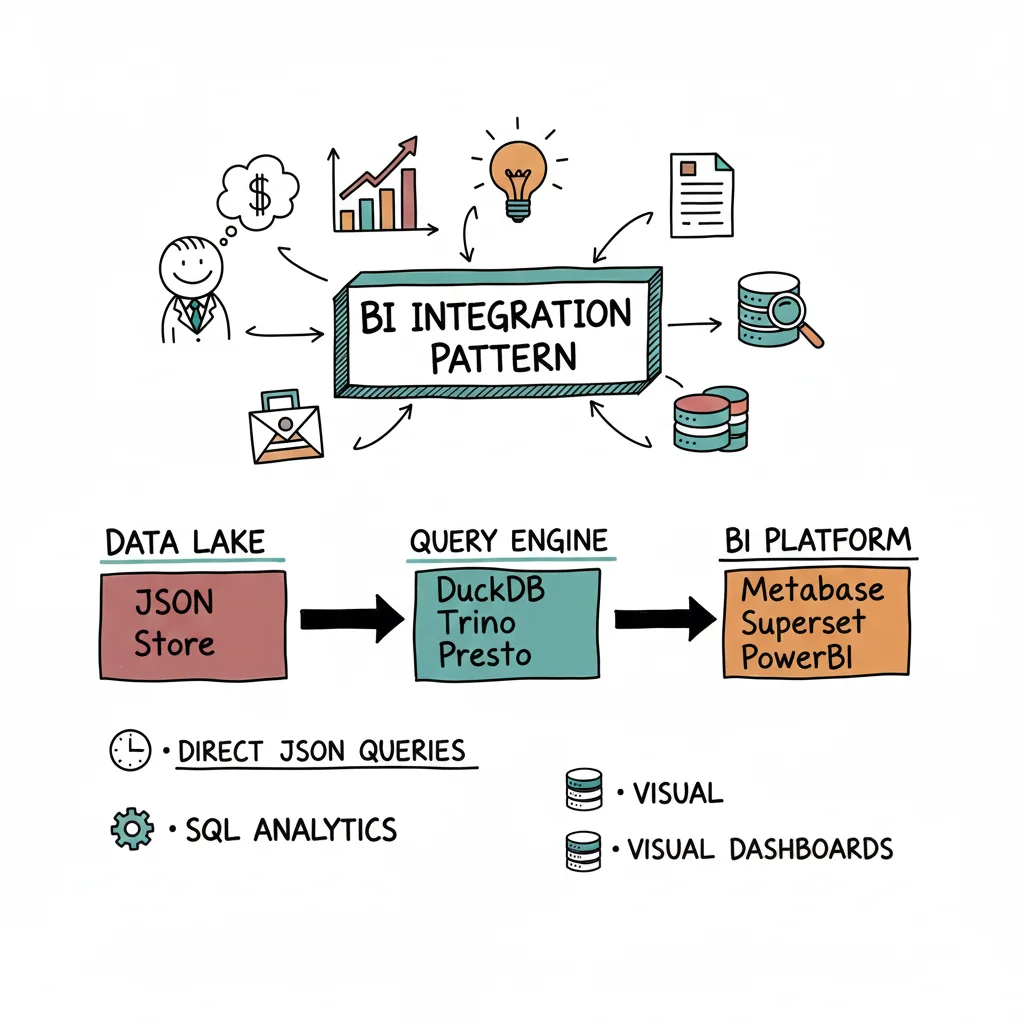
BI-Analystin eines Fertigungsunternehmens, die ein abteilungsübergreifendes Dashboard erstellt

Ausgangslage
Das Dashboard benötigt Vertriebs-, Bestands-, Buchhaltungs- und Fertigungsdaten gemeinsam, aber die direkte Abfrage all dessen aus Odoo ist komplex und langsam.
Lösungsweg
Sie verbindet Metabase über eine Query-Engine direkt mit dem normalisierten JSON im Odoo DataLake und kombiniert so alle vier Bereiche in einem Dashboard.

FAQ

Häufige Fragen

Welches Problem löst Odoo DataLake?

Es konsolidiert operative Odoo-Daten an einem einzigen, adressierbaren Ort mit konsistenten Schemas, sodass analytische Abfragen, BI-Tools und KI-Pipelines nicht mehr jeweils eigene, Odoo-spezifische Extraktionslogik benötigen.

Verlangsamen schwere Abfragen auf dem DataLake mein produktives Odoo?

Nein. Schwere analytische Abfragen laufen gegen den entkoppelten DataLake und beeinflussen die Reaktionsfähigkeit des Odoo-ERP nicht; die Extraktion selbst läuft in der Regel in verkehrsarmen Zeitfenstern.

Was kann ich mit Odoo DataLake verbinden?

BI-Plattformen wie Metabase, Superset und PowerBI über SQL-kompatible Query-Engines wie DuckDB, Trino oder Presto; Suchmaschinen wie Elasticsearch, OpenSearch oder Meilisearch; Vektordatenbanken für RAG; sowie Datenpipeline-Tools wie Airflow, Dagster oder Prefect, die Data Warehouses wie Snowflake oder BigQuery beliefern.

Wie geht Odoo DataLake mit mehreren Odoo-Instanzen oder Versions-Upgrades um?

Es aggregiert Daten aus mehreren Odoo-Instanzen mit Instanz-Tagging für gefilterte Abfragen und liefert unabhängig von der Quellversion – von V15 bis V19 – konsistente Ausgabeschemas.

Was kostet Odoo DataLake?

Das Modul startet bei 1.999 EUR. Bei der Cloud-Nutzung sind 500 Datensätze kostenlos enthalten, bevor eine Abrechnung pro Datensatz greift, wenn Sie es auf der PrivateCloud-Infrastruktur von Simplify-ERP statt auf Ihrem eigenen Server betreiben.

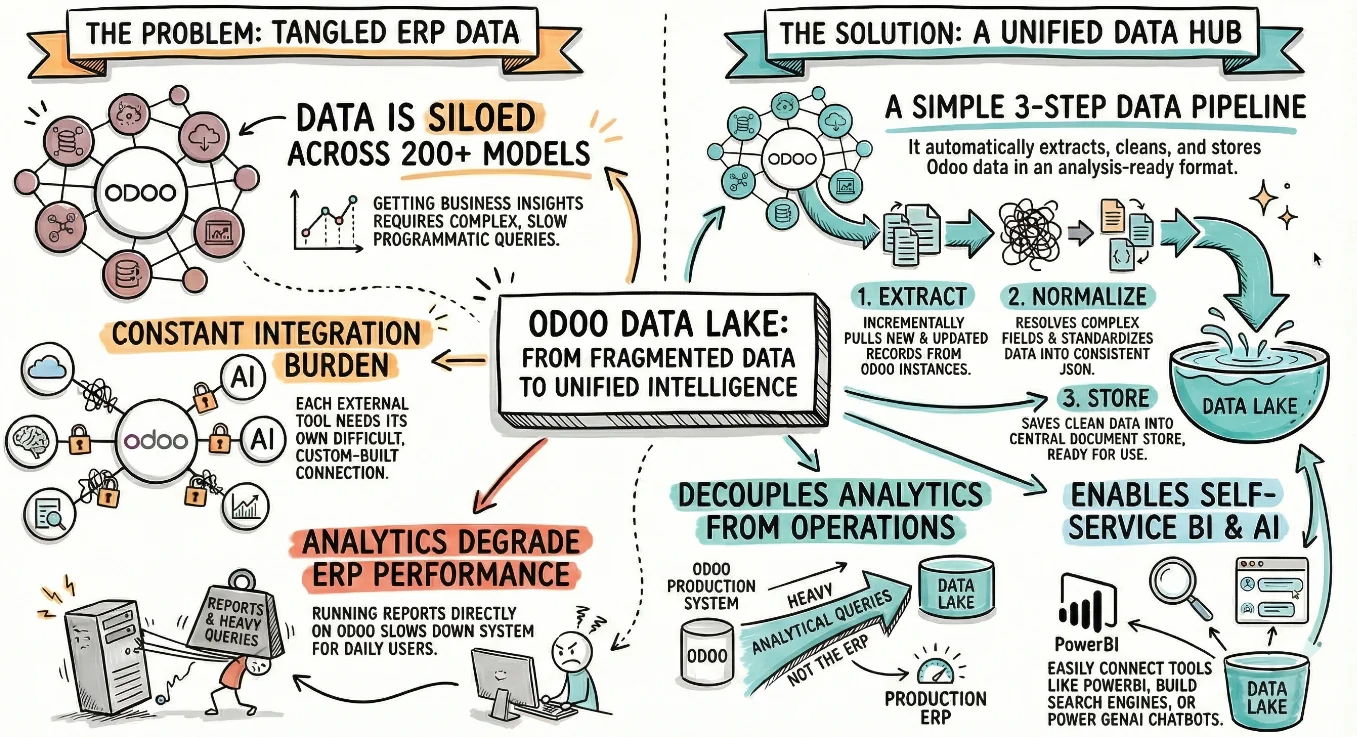
The Problem

Fragmented ERP Data

Odoo's modular design distributes critical business data across 200+ models with varying schemas, relationships, and access patterns.

Query Complexity Overhead

What should be a single analytical query becomes a programmatic orchestration problem.

Schema Inconsistency Across Versions

Data structures don't map cleanly between V15 through V19 instances.

Downstream System Integration Burden

Duplicated integration effort introduces maintenance debt.

Compute-Intensive Field Dependencies

Large-scale extraction degrades operational performance.

The Solution

Consolidated Data Container

An extraction-normalization-persistence layer that decouples analytical workloads from operational systems.

Core Extraction Engine

Incremental extraction using write_date field for change detection.

Schema-Aware Normalization

Consistent output schemas regardless of source Odoo version.

JSON Document Store

Organized by model and extraction timestamp with compression.

Metadata Catalog

Discover available data assets and detect schema evolution.

Odoo Data Lake Overview

Value Proposition

Single Source of Truth

Consolidate operational data into one addressable location. Data consistency is enforced at extraction time.

Clean Processing-Ready Format

JSON output with predictable schemas. Relational references resolve to embedded objects.

Decoupled Workloads

Heavy analytical queries execute without impacting Odoo ERP responsiveness.

Version-Agnostic Access

Consistent output schemas regardless of source version (V15 through V19).

Benefits

Operational Benefits

Reduced Integration Maintenance

Integration points decrease from N×M to N+M.

Preserved ERP Performance

Extraction runs during off-peak windows.

Simplified Disaster Recovery

JSON stores replicate independently of Odoo backups.

Strategic Benefits

AI/ML Enablement

Clean JSON serves as direct input for ML pipelines.

Self-Service Analytics

SQL-compatible query engines operate directly on JSON.

Compliance Documentation

Immutable snapshots provide audit trails.

Features

Selective Model Extraction

Configure extraction scope from individual models to complete database mirrors. Pattern matching for module-specific extraction.

Incremental Synchronization

Change detection minimizes extraction overhead. Failed runs resume from last successful batch.

Schema Evolution Handling

Automatic schema detection and validation. Breaking changes trigger alerts.

Multi-Instance Consolidation

Aggregate from multiple Odoo instances with instance tagging for filtered querying.

Vectorization Pipeline

Export hooks feed vector embedding services. Parquet and JSONL output formats.

API Access Layer

RESTful and GraphQL interfaces. Webhook notifications on extraction completion.

Downstream Applications

Business Intelligence Dashboards

Connect SQL-compatible analytics platforms directly to normalized JSON through query engines like DuckDB, Trino, or Presto. Build cross-functional dashboards combining sales, inventory, accounting, and manufacturing data without Odoo query complexity. Visualization platforms including Metabase, Superset, and PowerBI integrate without custom connectors.

Business Intelligence Dashboards

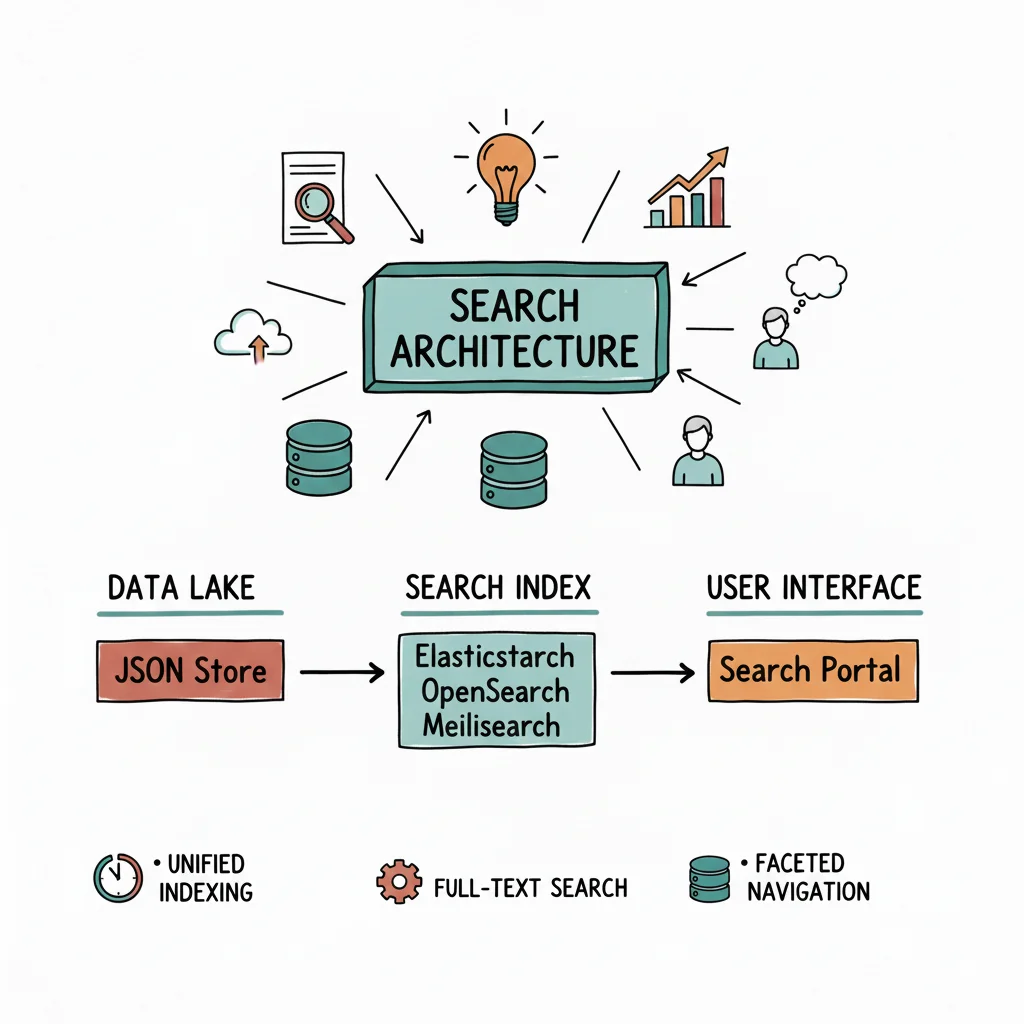
Information Search

Index normalized records into full-text search engines such as Elasticsearch, OpenSearch, or Meilisearch. Enable organization-wide ERP content search spanning partners, products, orders, documents, and communications. Faceted search filters by model type, date ranges, company, and custom field values.

Mehr erfahren
Information Search

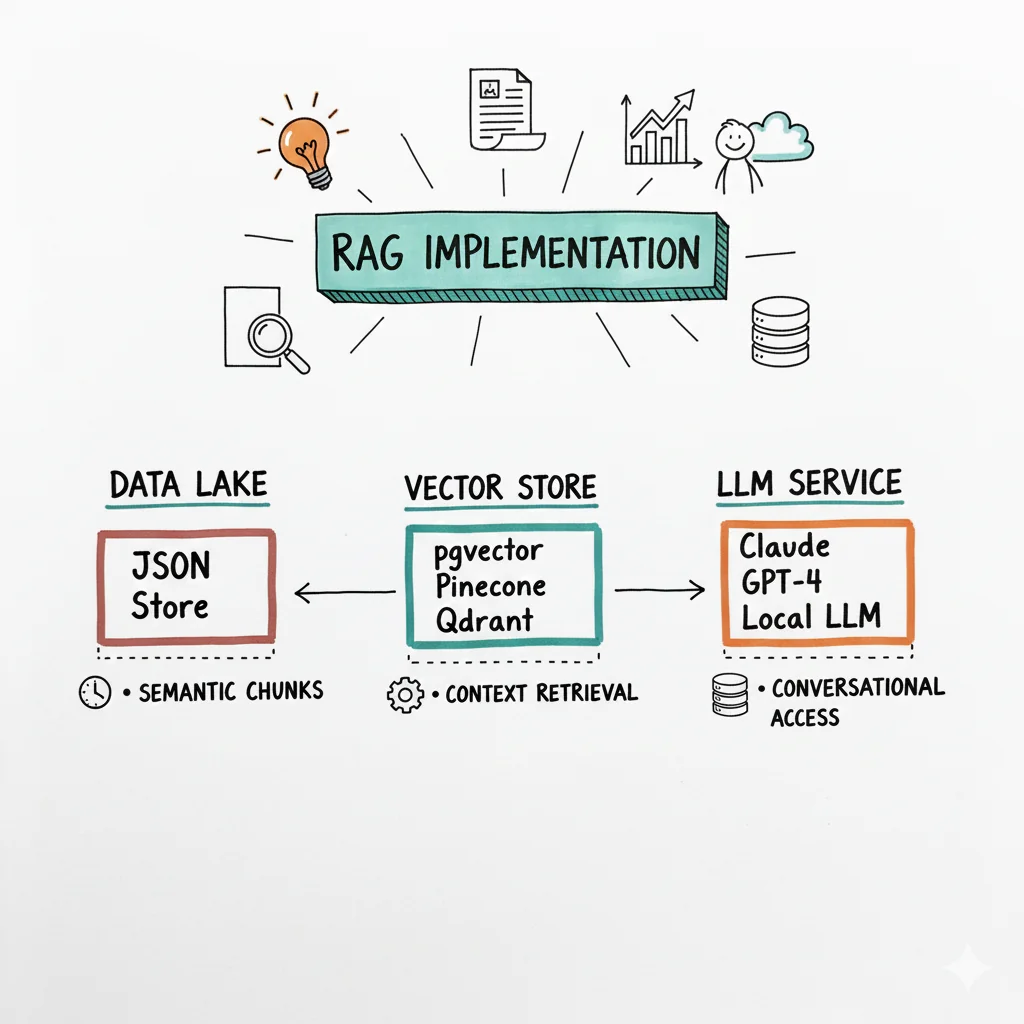
GenAI Chat Interface

Vectorize normalized content for Retrieval-Augmented Generation systems using vector stores like pgvector, Pinecone, or Qdrant. Enable natural language queries against ERP data. LLM responses from Claude, GPT-4, or local models ground in actual business data with source attribution.

Mehr erfahren
GenAI Chat Interface

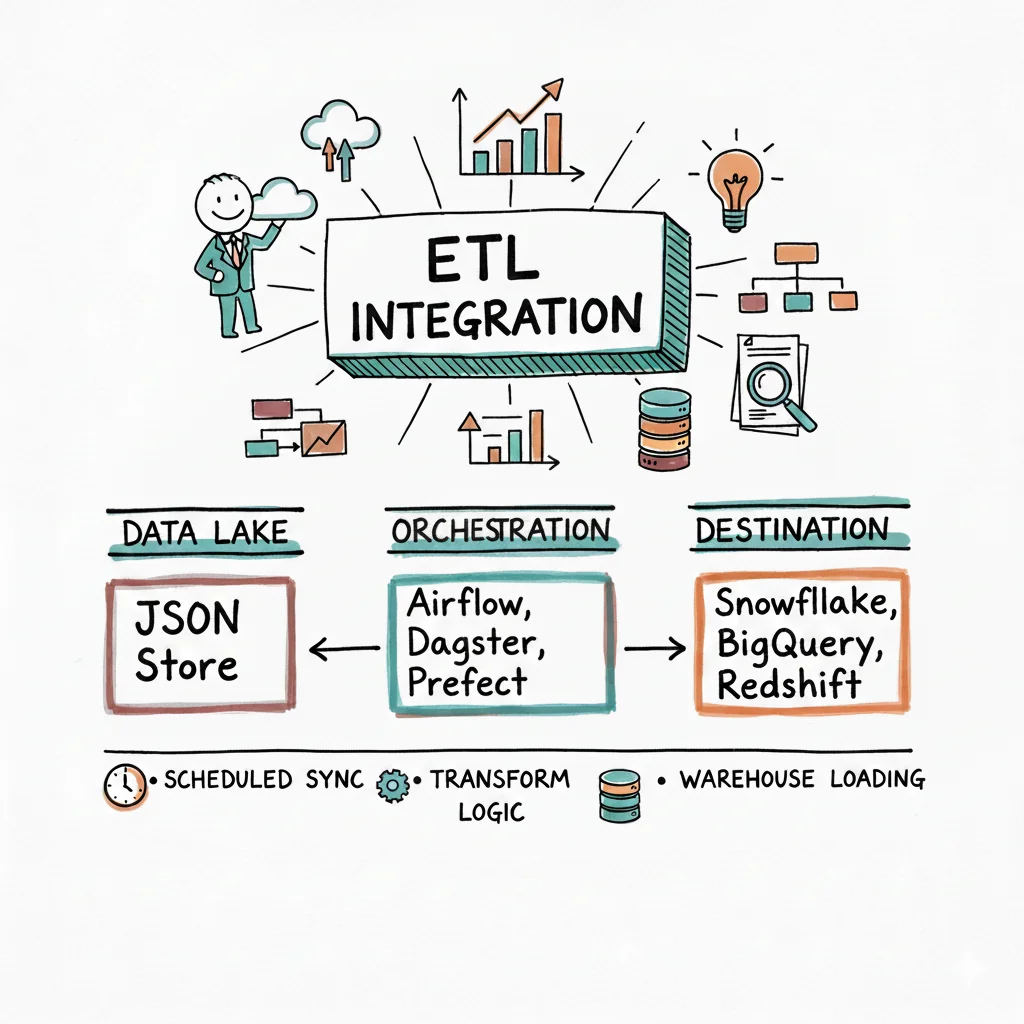
Data Engineering Pipelines

Feed enterprise data warehouses from normalized JSON exports through orchestration platforms like Airflow, Dagster, or Prefect. Data engineering teams consume cleaned Odoo data without Odoo-specific extraction logic. Destination warehouses including Snowflake, BigQuery, and Redshift receive consistent, typed data.

Mehr erfahren
Data Engineering Pipelines

Technical Architecture

System Components

Source Layer

Multiple Odoo instances (V15-V19) with independent databases.

Extraction Service

RPC client pool with incremental sync and error recovery.

Normalization Engine

Field resolution, relation flattening, version mapping.

Document Store

Model-organized collections with versioned snapshots.

Data Flow Pipeline

1

Schedule Trigger

Cron-based, webhook-triggered, or manual.

2

Record Extraction

Change detection and batch fetching.

3

Data Normalization

Field values, relational references, type standardization.

4

JSON Storage

Write documents, update catalog, compress.

Deployment Specifications

ComponentRequirement
Odoo ConnectivityXML-RPC or JSON-RPC access
Supported VersionsV15, V16, V17, V18, V19
Storage BackendLocal, S3, Azure Blob
SchedulingCron, webhook, manual
Resources2GB RAM minimum

Implementation Approach

1

Core Models

Extract res.partner, res.company, res.users.

2

Transactional Data

Add sales, purchase, accounting models.

3

Downstream Integration

Connect BI and search infrastructure.

4

AI Enablement

Implement vectorization and RAG interface.

Transform fragmented ERP data into unified business intelligence.

Bereit loszulegen?

Buchen Sie eine kostenlose 30-Minuten Beratung mit unseren Experten. Unverbindlich.

Kostenlos 30 Min -- unverbindlich